分类: Industry

  • Uses of CNC Machining in Various Industries

    Uses of CNC Machining in Various Industries

    Computerized Numerical Control or CNC machining is a technology used widely in various industries to manufacture parts. It is a subtractive process where cutting tools are used to cut raw materials into the desired shape. Companies like CNC machining China provide industries with a wide variety of CNC services and precision machined parts using tools like drills and grinders. In this article, we expound on CNC machining applications.

    Applications of CNC Machining Technology

    Industries where CNC machining technology is used, include;

    1. Automotive Industry

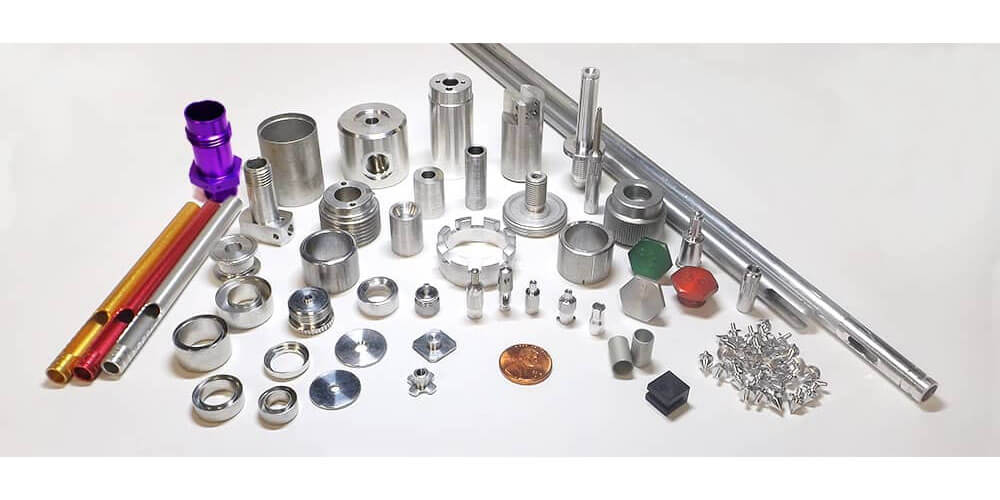
    The primary use of CNC machining is production and prototyping. The process incorporates different materials like metal and plastics. Extruded metal is used to develop gearboxes, axels, cylinder blocks, and valves, while some types of plastics can be used to create various components like dashboard panels and gas gauges. CNC machining technology allows the customization of parts which often happens in the automotive industry.

    2. Aerospace Industry

    This is an industry where the use of CNC technology has existed for years. It is ideal for manufacturing metal components that need a high level of accuracy. Manufacturers apply this process to produce aircraft pieces made from metal. In addition, the CNC machines and cutting tools produce parts like engine mounts, fuel access panels, and flow components used in this application.

    3. Military and Defense

    The military is known for carrying out its activities in many different environments. The government has placed regulations that the industry needs to meet regarding their machining parts. One requirement for those parts is the ability to withstand any environment or terrain they are subjected to.

    Thus, the sector had to invest in current CNC machining forms to meet these demands. Metal is the primary material used to customize large parts and is either pure or mixed to form alloys and is durable to last years. CNC technology benefits the industry by developing parts of planes, electronics, transport equipment, communication tools, and many other components.

    4. Medical Industry

    The development of tools with high precision levels is vital for proper diagnosis and treatment. CNC machining technology manufactures disposable surgical instruments and machine parts and other components like MRI machine parts, monitoring devices, orthotic devices, and implants. It’s a high-speed process that allows the fast production of parts, making it a significant technology in the medical industry.

    5. Oil and Gas Industry

    Typically, oil machines and their parts run for a long time; thus, the durability of the materials is essential. In addition, robust, sturdy, and high accuracy levels are necessary, so CNC machining is ideal for producing such parts. It develops efficient and leak-proof parts, vital when dealing with substances like oil and gas. CNC also enables the customization of parts with complex details, high tolerance, and dependability.

    6. Electronic Industry

    CNC machining creates many electronic components for use in different environments and various benefits. Electronics like smartphones, tablets, and laptops are made for consumer use. Parts like housings, fixtures, and jigs are also manufactured for electric purposes.

    Conclusion

    Many more applications benefit from CNC machining, like the marine industry. The technology is modern, hence sectors that use it stay relevant and up to date with the current trends.
  • All You Need To Know About CNC Machining

    All You Need To Know About CNC Machining

    You must have a million questions. What is CNC Machining? What is CNC Machining Capabilities? You do not need to worry; we will discuss all those in this article. In the modern manufacturing industry, CNC machining refers to computer numerical control. CNC machining is defined as subtractive manufacturing, a term that means to create three-dimension objects by chipping away at a solid block either manually or using a machine.

    Note, CNC machining uses computerized controls and machine tools to strip layers from a blank or workpiece to create a custom design. One of the advantages of this manufacturing process is that you can work with any material, including plastics, wood, metal, glass, and foam. 

    CNC is applicable in many industries, including large CNC machining services and CNC machining of aerospace parts. CNC usage evolved from numerical control machining, which utilized punched tape cards, an analog form of data storage, and it takes place through the following stages:

    1.Creating a computer-aided design

    The CNC process commerces with the preparation of a solid 3D part or 2D vector with the help of CAD design. This is done by the manufacturing company or outsourced. Computer-aided design software allows manufacturers to produce a working model program using the provided dimensions and geometric specifications.

    2.Converting the computer-aided design file into a CNC program

    Using a CNC compatible file format like STEP or IGES, the configured CAD design runs through a computer-aided manufacturing software to generate the program used controlling CNC aided machines. The program’s code is used to manipulate/command the integrated machines to make a custom-designed product or a specific product part.

    CNC machines use a variety of programming languages, including G-code and M-code. Geometric code (G-code) is the most commonly used programming language. The program is designed to control when, where, and how the machine tools move over the target mold.

    3.Preparing the CNC machine

    Setting up the CNC machine is an essential step in CNC manufacturing. This step involves the engineers preparing the CNC machine for operation. The workpiece is placed in the right position, as well as the working tools. Once the CNC machine is configured, the CNC program runs through the machine.

    4.Executing the machining operation

    The CNC program acts as the instructor for the CNC machine, telling it how to cut, when to cut, and how long. The program also instructs the CNC machine when to stop and when to start up again. Since the CNC machine is computer-integrated, the process is seamless, and the attending engineer can keep a close eye on the process to spot any mistakes that might be in the program and correct them.

    The process is fast and accurate. The resulting part or product does not have any marks that would have occurred if the cutting is done manually.

    In conclusion

    Computer Numerical Control machining can work on various materials, including glass, wood, foam, composite, glass, plastic, and metal, giving the client a variety of materials to use in designing. CNC machining is also incredibly fast and precise. The manufacturing industry benefits exponentially form CNC manufacturing as it is perfect for both small scale and large scale production of parts and products.

  • Understanding the Genesis of CNC Milling Services

    Understanding the Genesis of CNC Milling Services

    Computer numerical control machining, also known as CNC Machining (CNC milling services), refers to the automated removal of different materials from a block, like plastic or, better yet a metal resulting in a finished product. That process, also identified as subtractive manufacturing, is often controlled using a computer program and then executed via motorized machine tools. In this article, we highlight detailed information regarding CNC milling services.

    So why invest in CNC machining?

    At proto labs, the management offers viably quick-turn machining that works appropriately for rapid and low-volume prototyping. The stock, usually of over 30 engineering-grade thermoplastic coupled with metallic materials, can always help in making machining a perfect choice for testing the functionality of a product.

    Also, they provided the hundreds of CNC machine manufacturing elements in rather less time than the actual time taken to acquire a quote from traditional machine shops; the whole process assists you in remaining ahead of schedule.

    CNC Machine Milling

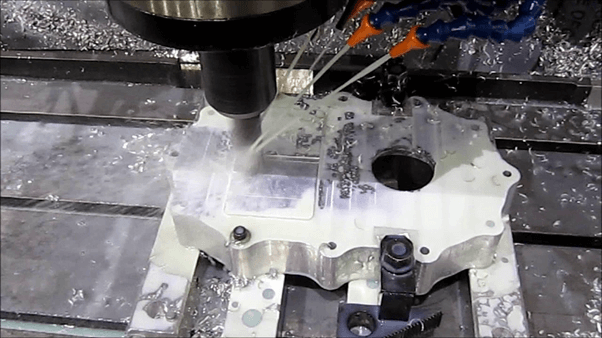
    Milling refers to a unique machining process that utilizes different rotary cutting tools that easily move along different axes to yank out material from a given block.

    A good CNC milling process utilizes 3-axis milling coupled with 5-axis indexed milling in cutting a choice of over 30 engineering-grade thermoplastics besides metals into complex shapes. The same machine and process can be used to create relatively precise elements.

    Turning

    Turning refers to a CNC machining process that uses some lathe material to create a detailed and functional prototype with various cylindrical features. The turning process utilizes a rod stock, rotated against the tooling to design the final products using an axial hole and a groove.

    The history of CNC Machining

    In the 18th century, a man started the CNC machining process. In the real sense, actually, the first turning machine that had some machine with a metallic frame was invented then. The first turning machine was introduced into the market in 1751.

    The initial long series of various machines was geared towards creating a precise operation mechanically as compared to the possibly handcrafted techniques. It marked the outset of industrialization.

     Around the time of the Cold War, the development of different automation systems was vividly addressed. So at that time, Parsons Works was entrusted with the responsibility of enhancing the production line for various helicopter blades.  In 1952, a man by the name Richard Kegg partnered with MIT to develop a top-notch CNC milling machine. So the Cincinnati Milacron Hydrotel became the first CNC milling machine in the market. It marked the commercial outset of the technology.

    The production industry relies on CNC machining to shape models and other elements. The multiple CNC machine advantages imply operator-required equipment have in several cases, been largely replaced. At the same time, the manufacturers of several types of machines in multiple sectors choose the pros of CNC machining entirely for the fabrication applications.

    Final Thoughts

    CNC milling services include different processes that often meet stringent client demands. You can go ahead and upload the CAD files and then gain access to instant quotes before getting your parts into a viable production in just a few minutes.

  • How to make use of the 3D Printed Drone Kit

    How to make use of the 3D Printed Drone Kit

    The invention of the 3D printer was a big boon to the world of engineering and architecture especially. Models and prototypes of just about any detailed computer diagram could be printed in a matter of minutes or hours at most.

    However, the 3D printers are not just useful in a working environment or official setting. The 3D printers were a lot of fun when they were initially produced. They still are a lot of fun as they allow one to print just about anything (a feature kids, youths and even some adults enjoy).

    There are various types of 3D printers. Now, the 3D printer has made it possible to possess the magic of the 3D printed drone kit as well as all the fun that comes with it. The 3D printed drone kit is more than just a regular drone set.

    What exactly is a 3D Printed Drone Kit?

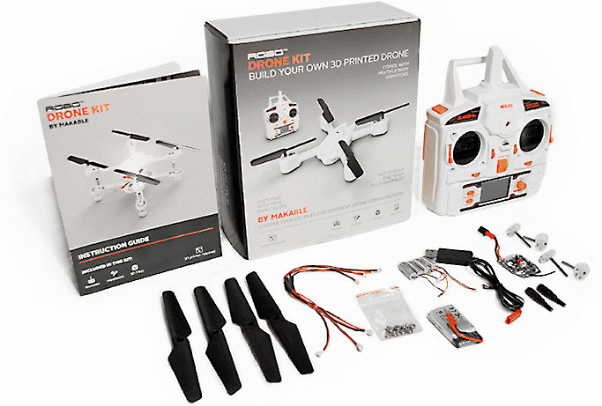
    This particular drone set (the 3D printed drone kit) makes use of 3D technology to complement itself. What exactly does that mean? Well, it is a drone set which is to be assembled by “yourself”. So it is kind of like a “do it yourself” (DIY) pet project.

    The drone set comes in various parts or pieces for you to assemble. But the “3D printed” in its name comes from the fact that you have to print some parts on your own using a 3D printer. The material you want to use is left to you to decide. The texture of the material, its color, and any other little details are left up to you.

    Benefits of the 3D Printed Drone Kit

    The most obvious benefit of the drone kit is discovered in how much of a fun package this is. This drone set allows one to start having fun right from the get-go (the coupling or assembling process). You can experience the fun of having to print certain required parts of the drone by yourself.

    Although it might seem stressful, it is the best part or feature of the drone. This is because you could use just about any material you desire. The texture, the color, all the details of the material you want to use are left for you to choose. So in a way, you are a part of the manufacturing process. How much fun is that?

    However, to make the best out of the drone, you might want to consider making use of its real-time streaming abilities. Pictures and videos streamed are displayed in 1080p full HD resolution. That is possible as the drone has a built-in Wifi video camera that can be used for real-time displays.

    The 3D printed drone could also be used for more educational purposes. For instance, giving kids in a school environment the opportunity to assembly the drone on their own (after giving instructions) is highly beneficial. This is because it allows them to brainstorm and face a sort of real-life challenge. It helps their problem-solving skill. It could also be used in subjects such as physics and mathematics for a variety of topics including gravity, mechanics, elevation and many others. The kids are also exposed to technology such as Bluetooth and even the lithium battery.

    The drone is super easy to use and control. It has a headless mode which allows for any of its sides to serve as the front. If you explore the drone long enough 360 ᵒ turns as well as other maneuvers will come naturally to you.

    Conclusion

    This drone set fits just about everyone. It engages your creativity in the printing part as you get to choose the colors you love. It is easy to assemble and loads of fun.